
Since the 1970s Jyoti Duwadi has created a multifaceted body of work. His sculptures, paintings, drawings, installations, and digital art reflect an openness to both chance and discovery.

Jyoti experiments with a wide and remarkable array of natural materials and human-made objects, including industrial sanding belts, bamboo, beeswax, and earth gathered from around the world. The artist displays an innate ability to transform ordinary, discarded objects, such as the humble egg carton, into sculptures.


Often the results are humorous, as in his series of waxed sculptures – an old travel iron, repaired tea pot, antique automobile gas funnel – that can be appreciated for their relationship to Pop Art. Jyoti diverges from this 1960s movement by accentuating an object’s formal design and creating sensuous surfaces.


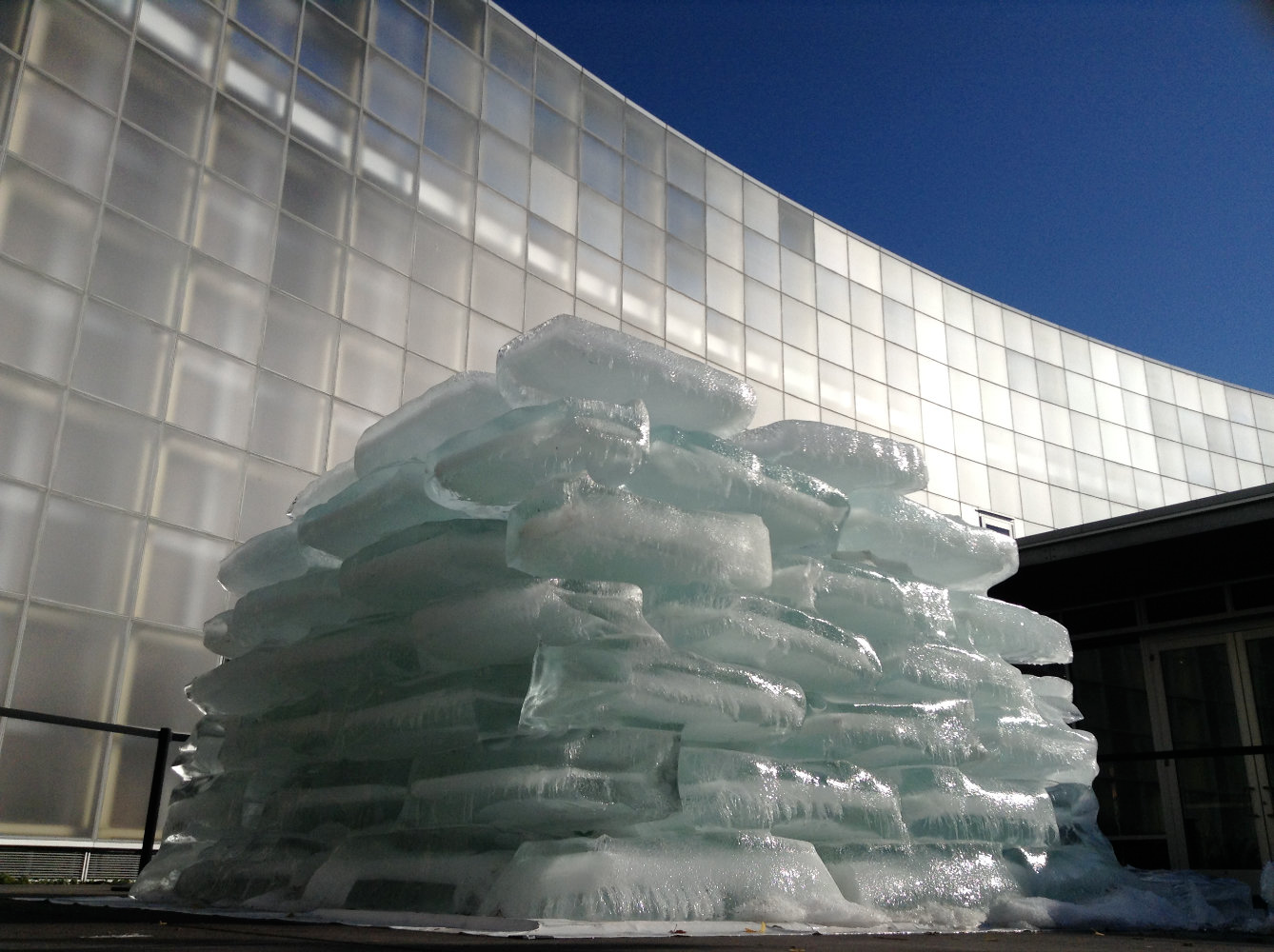
Many of Jyoti’s artworks, made from natural elements that express the intrinsic beauty of Earth’s forms and colors, are intimately scaled for personal reflection. By contrast, his views about war and peace, climate change, and the loss of biodiversity take the form of large-scale sculptural installations and remediation projects involving community participation.


The art and rituals that Jyoti absorbed from his native Nepal inspire the rich palette of colors and Tantric geometries in much of his work. While attending the Besant Theosophical School in Varanasi, India in the 1960s, Jyoti was exposed to a fusion of eastern and western mystic traditions that seek to convey the divine essence of nature. Later exposure to the art of Wassily Kandinsky, an early modernist who also embraced theosophy, reinforced Jyoti’s personal style of abstraction, as did the art of Paul Klee and abstract expressionists Jackson Pollack and Adolph Gottlieb.

Jyoti began drawing and painting in 1973 while enrolled at Claremont Graduate School (now Claremont University) in California. Five years later, he had his first solo exhibition at Pitzer College’s Salathe Gallery. After completing his dissertation, “Kathmandu: Concepts for Rejuvenation” and earning a PhD in Government, Jyoti devoted himself to making art.


Jyoti lived in a two-story carriage house on the campus of Claremont University, where he worked part-time as coordinator of the audiovisual department. He taught himself video using the equipment in his department. His first film, “Sunrise on a Planetary Dream” (1983-1985) reveals a microscopic view into the cosmic imagery of twenty enamel paintings from the late 1970s. Jyoti highlights the intricate details that defined his technique of swirling and blending vibrant enamel colors purchased at the local hardware store. The imagery morphed back and forth between the biological and the galactic.
The art and rituals that Jyoti absorbed from his native Nepal inspire the rich palette of colors and Tantric geometries in much of his work. While attending the Besant Theosophical School in Varanasi, India in the 1960s, Jyoti was exposed to a fusion of eastern and western mystic traditions that seek to convey the divine essence of nature. Later exposure to the art of Wassily Kandinsky, an early modernist who also embraced theosophy, reinforced Jyoti’s personal style of abstraction, as did the art of Paul Klee and abstract expressionists Jackson Pollack and Adolph Gottlieb.


Jyoti began drawing and painting in 1973 while enrolled at Claremont Graduate School (now Claremont University) in California. Five years later, he had his first solo exhibition at Pitzer College’s Salathe Gallery. After completing his dissertation, “Kathmandu: Concepts for Rejuvenation” and earning a PhD in Government, Jyoti devoted himself to making art.
Jyoti lived in a two-story carriage house on the campus of Claremont University, where he worked part-time as coordinator of the audiovisual department. He taught himself video using the equipment in his department. His first film, “Sunrise on a Planetary Dream” (1983-1985) reveals a microscopic view into the cosmic imagery of twenty enamel paintings from the late 1970s. Jyoti highlights the intricate details that defined his technique of swirling and blending vibrant enamel colors purchased at the local hardware store. The imagery morphed back and forth between the biological and the galactic.